Silver’s Next Move: $309?

There’s something happening in the silver market right now that should make you stop mid-scroll and reassess everything you thought you knew about precious metals.
Because when a major institution like Bank of America starts floating a $309 price target for silver, it’s not some wild, out-of-left-field prediction — it’s a delayed acknowledgment of a trend that has already been building beneath the surface for years.
And if you’ve been following our MoneyQuake thesis, you already know this: The institutions aren’t leading this move… they’re reacting to it.
What they’re doing now is carefully stepping into a narrative we’ve been laying out in plain sight, inching their way toward conclusions they’re still not fully comfortable stating outright.
What’s even more telling is how cautiously they frame it. They call it an “extreme scenario.” They wrap it in conditional language.
They hedge.
But strip away the qualifiers, and what they’re really saying is this: Under the current trajectory of supply constraints, industrial demand, and monetary instability, silver doesn’t just have upside — it has explosive, asymmetric potential.
And the fact that one of the largest financial institutions in the world is even entertaining that level of price movement tells you everything you need to know about how tight this market is becoming behind the scenes.
The Institutional Catch-Up Trade Is Underway
What we’re witnessing right now is the early phase of institutional repositioning, and it always looks like this at the beginning.
First, the big banks ignore the trend. Then they downplay it.
Then, almost overnight, they start publishing research that mirrors what independent thinkers and contrarian investors have been saying for years.
That’s exactly what’s happening with silver. The gold-to-silver ratio, long stretched and distorted, is finally being recognized as unsustainable.
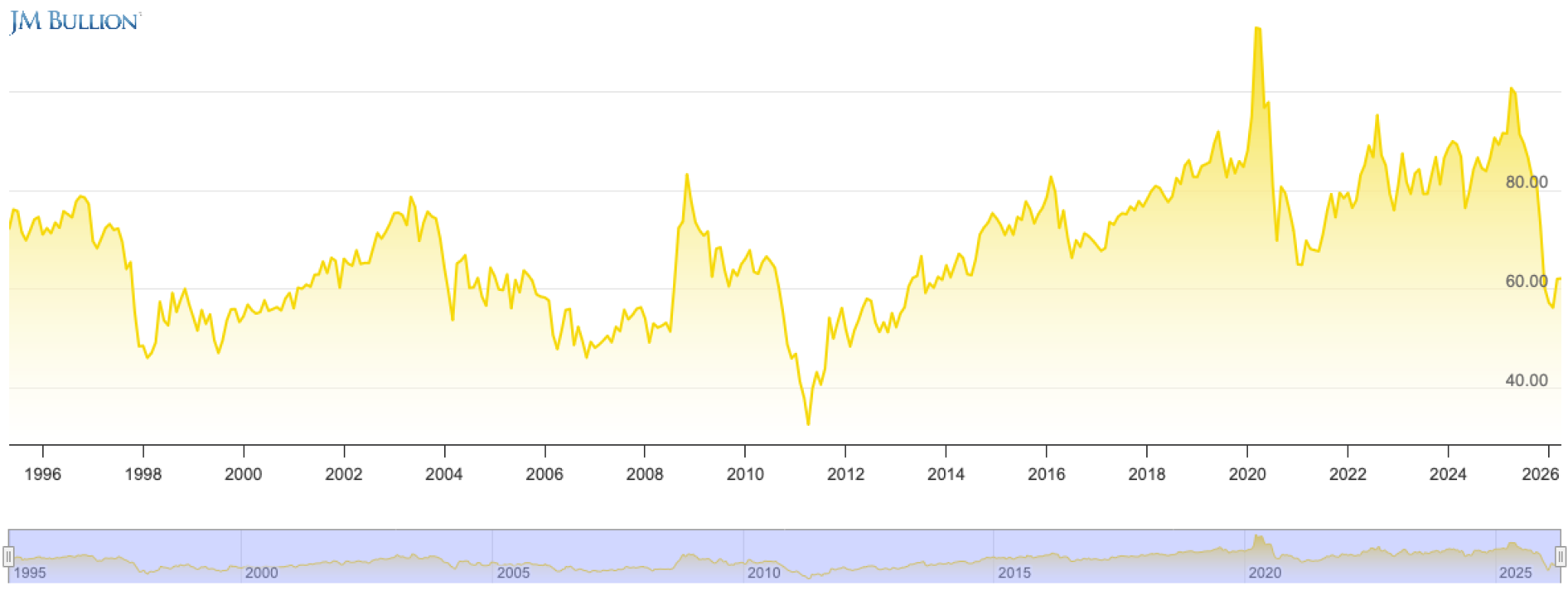
And when that ratio begins to compress — as it always does during late-stage precious metals bull markets — silver doesn’t drift higher. It accelerates violently, often outperforming gold by multiples in a very short period of time.
Historically, this is not a subtle move.
In 1980, silver went parabolic. In 2011, it nearly tripled in under two years.
And today, the setup is arguably more extreme than either of those periods because the underlying drivers are not just monetary — they are industrial, technological, and structural. This is not just a “precious metals rally.”
This is a full-scale revaluation of a critical resource that sits at the intersection of global finance and global industry. And institutions like Bank of America are now being forced to acknowledge that reality, even if they’re not ready to fully embrace the implications.
The Best Free Investment You’ll Ever Make
Join Gold World today for FREE. Get the latest insight on gold, silver, and precious metals delivered straight to your inbox. When you become a member today, you’ll get our latest free report: “The #1 Golden Token to Buy Now.” Don’t Delay!
After getting your report, you’ll begin receiving the Gold World e-Letter, delivered to your inbox daily.
The Supply Crisis No One Wants to Fully Admit
Here’s where the story becomes far more serious than most headlines suggest.
Because while analysts are comfortable talking about ratios and price targets, they are far less comfortable confronting the physical constraints of the silver market.
The truth is, we are now several years into a structural supply deficit, where global demand continues to outpace production with no clear path to closing the gap.
This isn’t a temporary imbalance driven by cyclical factors. It’s the result of years of underinvestment, declining ore grades, and increasingly complex permitting environments that make it extraordinarily difficult to bring new supply online.
At the same time, demand is not just growing — it’s accelerating. Silver is no longer just a store of value or a hedge against inflation.
It has become a mission-critical industrial input for some of the most important growth sectors in the global economy. Solar panels, electric vehicles, semiconductors, and AI-driven data infrastructure all rely on silver in ways that are not easily substituted or scaled back.
And that creates a dynamic where demand is relatively inelastic, even as prices rise. In other words, the very industries driving the next wave of economic expansion are simultaneously tightening the supply of one of their most essential raw materials.
The MoneyQuake Collision: Monetary + Industrial
This is exactly what we’ve been calling the “Conjoined Twins” of the MoneyQuake thesis, and silver sits right at the center of that collision.
On one side, you have the monetary drivers — currency debasement, sovereign debt expansion, central bank gold accumulation, and a growing loss of confidence in fiat systems. These forces alone would be enough to support a long-term bull market in precious metals.
But silver doesn’t stop there. It also rides the second wave — the industrial supercycle driven by AI, electrification, and global infrastructure buildouts that require enormous quantities of metals to sustain.
And when those two forces converge, you don’t get a normal commodity cycle.
You get a supply-demand imbalance that feeds on itself, where rising prices attract investment demand at the same time industrial demand continues unabated.
This is how markets transition from steady uptrends into explosive, nonlinear moves. It’s not just about scarcity — it’s about the realization of scarcity happening in real time, with no immediate solution.
That’s the environment we’re entering now, and it’s why even conservative institutions are starting to float price targets that would have seemed absurd just a few years ago.
The Warning Signs Are Already Flashing
If you look closely, the stress in the silver market is already visible. Physical inventories are tightening. Lease rates have shown signs of spiking.
In certain moments, spot prices have traded at premiums to futures — an unusual condition that signals immediate demand for physical metal.
These are not normal market behaviors. They are early indicators of a system under pressure, where the balance between supply and demand is becoming increasingly fragile.
And historically, when those cracks begin to show, they tend to widen quickly.
What makes this even more compelling is the volatility we’ve been seeing in recent price action. Silver doesn’t move in a straight line. It never has. It consolidates, it corrects sharply, and then it surges.
Those sharp pullbacks that shake out weak hands are not signs of weakness — they are part of the mechanism that builds energy for the next move higher. Every major silver bull market has followed this pattern, and what we’re seeing now fits that historical blueprint almost perfectly.
Why We’re Positioned With Silvercorp Metals (NYSE: SVM)
This is why we’ve already taken action, rather than waiting for confirmation from Wall Street. One of our core positions is Silvercorp Metals, and it’s not by accident.
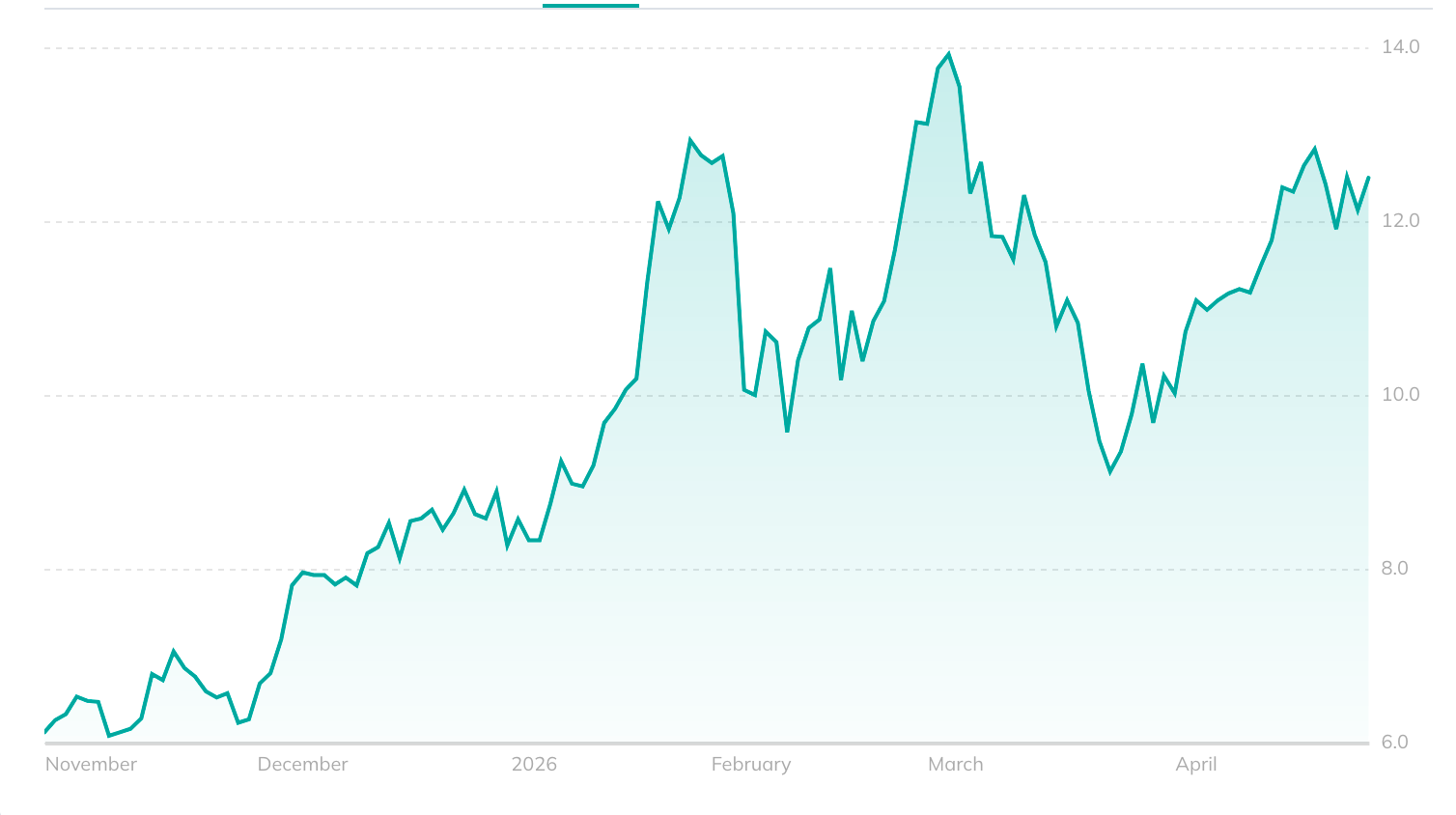
Because when silver begins to move in a sustained way, the real leverage doesn’t come from the metal itself — it comes from the companies producing it.
Silver miners operate with cost structures that remain relatively stable, which means that as the price of silver rises, their profit margins expand disproportionately.
In the case of Silvercorp, you’re looking at a company with a solid production base, exposure to rising silver prices, and the operational efficiency to capitalize on tightening supply conditions.
It’s not a speculative exploration play. It’s a producer positioned to benefit directly from the very dynamics we’re discussing. And in an environment where silver prices could move from elevated levels into triple-digit territory, that kind of leverage becomes incredibly powerful. It’s how a strong macro thesis translates into real portfolio performance.
The Bigger Picture: This Is Not a Normal Market
The most important thing to understand right now is that this is not a typical commodity cycle.
This is a market being reshaped by forces that extend far beyond supply and demand in the traditional sense. You have geopolitical tensions, monetary instability, technological transformation, and resource scarcity all converging at the same time.
And silver, perhaps more than any other metal, sits at the crossroads of those forces. That’s why the potential upside is so significant — and why the risks of being underexposed are equally high.
When institutions like Bank of America start putting out triple-digit price targets, they’re not trying to be sensational. They’re trying to prepare their clients for a scenario that is becoming increasingly difficult to ignore.
But even now, they are likely underestimating the speed and magnitude of what could unfold if the underlying pressures continue to build. Because once a true supply squeeze takes hold in a market like silver, the move is rarely gradual. It’s abrupt, disorderly, and often far exceeds even the most aggressive forecasts.
Final Thought: The Window Is Still Open — but Not for Long
We are at a critical juncture in the silver market, where the narrative is shifting but the full implications have not yet been priced in.
The early adopters are already positioned. The institutions are beginning to follow. And the broader market is still largely unaware of how tight this situation has become.
That’s the kind of setup that creates generational opportunities — where the risk-reward profile is heavily skewed in favor of those who act before the crowd arrives.
Because once this move becomes obvious, it will already be well underway. And at that point, the easy gains — the kind that come from recognizing a structural shift early — will already be behind us.
That’s why we’re not waiting.
We’re positioned, we’re prepared, and we’re watching closely as the next phase of the MoneyQuake begins to unfold.
Get to the good, green grass first…
The Prophet of Profit,

Brian Hicks
 Check us out on YouTube!
Brian is a founding member and President of Angel Publishing. He writes about general investment strategies for Wealth Daily and Energy and Capital. Brian is the managing editor and investment director of R.I.C.H Report (Retired Independent Carefree Healthy), New World Assets and Extreme Opportunities. For more on Brian, take a look at his editor’s page.
The Best Free Investment You'll Ever Make
We never spam! View our Privacy Policy
After getting your report, you’ll begin receiving the Wealth Daily e-Letter, delivered to your inbox daily.
Angel Publishing Investor Club Discord - Chat Now
Brian Hicks Premium
Introductory

Advanced


